🔐 OPAla Authentication
OPAla is our blazing-fast, centralized authentication and authorization system! Built on top of the powerful Open Policy Agent (OPA), it acts as the vault for all MapColonies authentication data.
⚙️ How It Works (The Bundling Magic)
Instead of brutally hammering a central database for every single user request, OPAla uses a highly optimized "bundling" approach:
- 👀 The system quietly watches the database for any changes to connections or API keys.
- 📦 When a change happens, it instantly compiles the new rules into an OPA bundle and ships it to S3.
- ⚡ OPA sidecars running next to your services download these bundles, allowing them to make instant, local access decisions with zero network latency!
🏗️ System Services
Behind the scenes, OPAla relies on a few core services:
- 🛡️
OPA (Open Policy Agent): The high-speed decision engine. It runs alongside your services, continuously pulling the latest bundles and enforcing access rules in real-time. - 🎛️
auth-manager: The central API used to manage and tweak authentication data inside the database. - ⏱️
auth-cron: The relentless background scheduler that checks for database updates and uploads fresh bundles to S3. - 🎫
token-kiosk: A dedicated backend service specifically handling the secure generation and retrieval of authentication tokens for B2C clients.
🖥️ User Interfaces
Forget wrestling with APIs—managing access is easy via our UI portals!
-
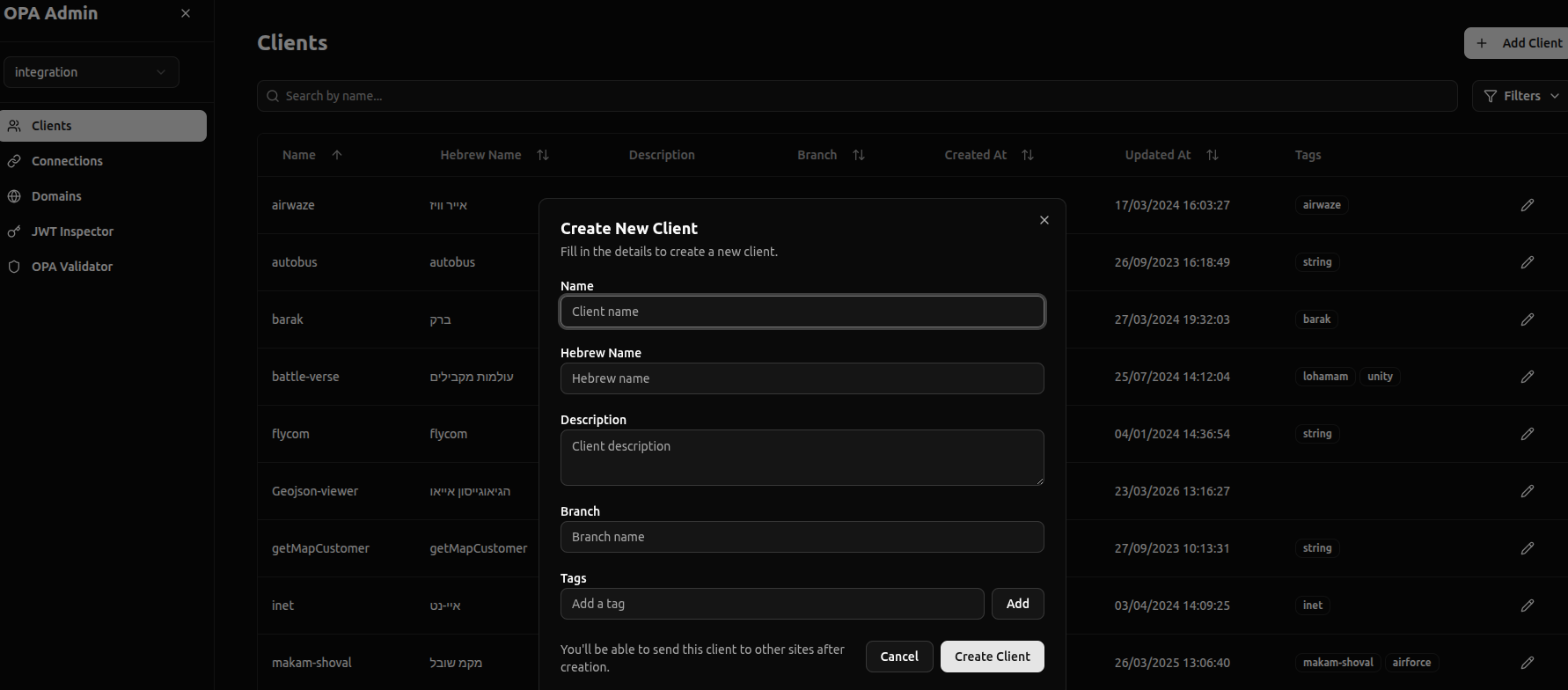
Auth UI: A sleek, user-friendly dashboard for creating, searching, and managing your authentication data (like clients and connections).
-
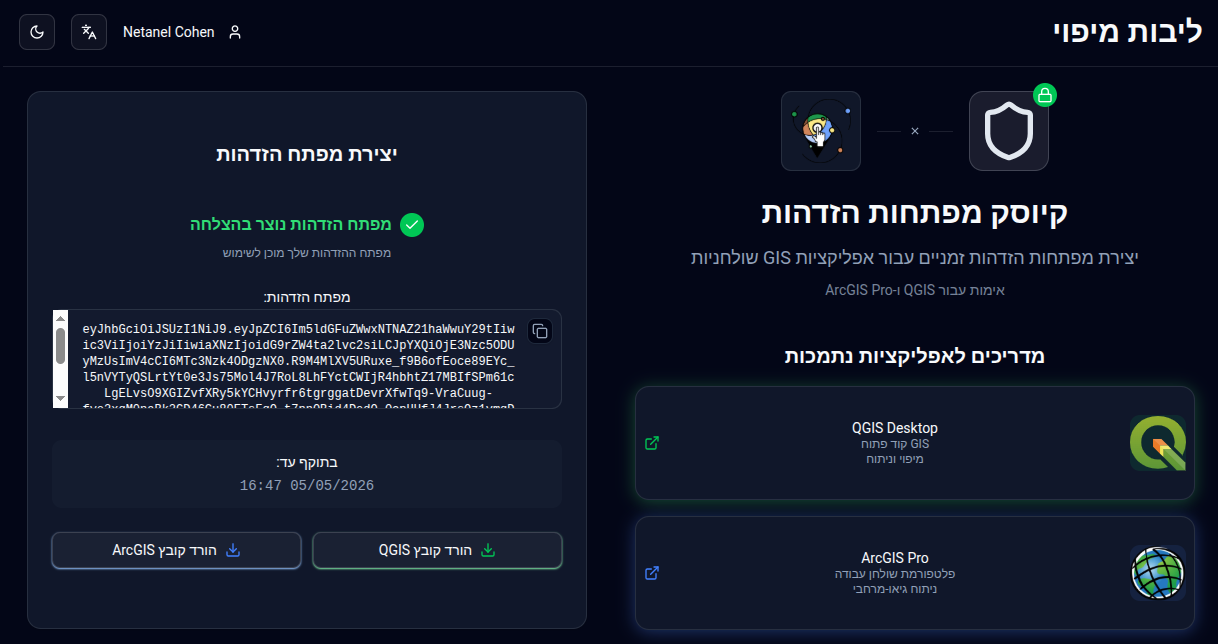
Kiosk UI: A secure, dedicated visual portal specifically for generating B2C tokens (like ArcGIS-Pro and ArcMap).
🕵️ Security and Logging
OPAla includes built-in, out-of-the-box security features:
- 🎭 Masked Tokens: To prevent catastrophic leaks, token details are strictly masked in all OPA responses!
- 🔇 Filtered Logs: We hate log noise. To help you spot real security threats instantly, the system is configured to log only denied requests. If a request is blocked, you will see it immediately!